
.png)
The lost art of curiosity.
- purnimasadhana
- Aug 29, 2025
- 3 min read

Recently, a new member joined our household, bringing with them the shrieks and playful antics of a young mind. Suddenly, we were all very busy, and it felt like life had started moving again. A friend of mine made a lovely gesture by bringing a puppy. We had just lost our pet Cooper a few days earlier, and her gesture brought smiles to our lives.The most amazing part was the puppy's behavior—so curious about everything. He constantly demanded undivided attention, or chaos would ensue.
This experience took me back to the golden years of motherhood when my children were small, and I would answer their endless questions about life: why the sky is blue, why the sea is green, where water is stored in clouds, how lizards stick to walls, and so on. Today, when I look at the kids, the focus has shifted to questions like, "What should I write in my exams to score the highest?" In a nutshell, our approach has shifted from understanding to extracting, from wonder to utility, from asking "Why is this happening?" to "What should I write?"
For education the curiosity is not a luxury but it should be the compass. Not only does it inculcates the ability to ask layered , thoughtful . open ended questions to real understanding and you can avoid surface level familiarity.
We live in an era of rapid responses. In mere seconds, we turn to Google for summaries and AI-generated notes, obtaining answers in moments. While knowledge is readily available, curiosity is being stifled. Our brains are not given the opportunity to explore and connect ideas, leading to increased reliance on external sources and a decline in our thought processes. True intelligence lies not in providing quick answers, but in asking insightful questions that challenge the mind to analyze. Visual communication and sign language open windows and clear the cobwebs of the mind. Therefore, the ability to question ourselves is an incredible exercise. When you have taken an action and feel dissatisfied or troubled by it, you should be able to question and either justify or critique it. The capacity to analyze your own actions strengthens your inner resolve and boosts your confidence.
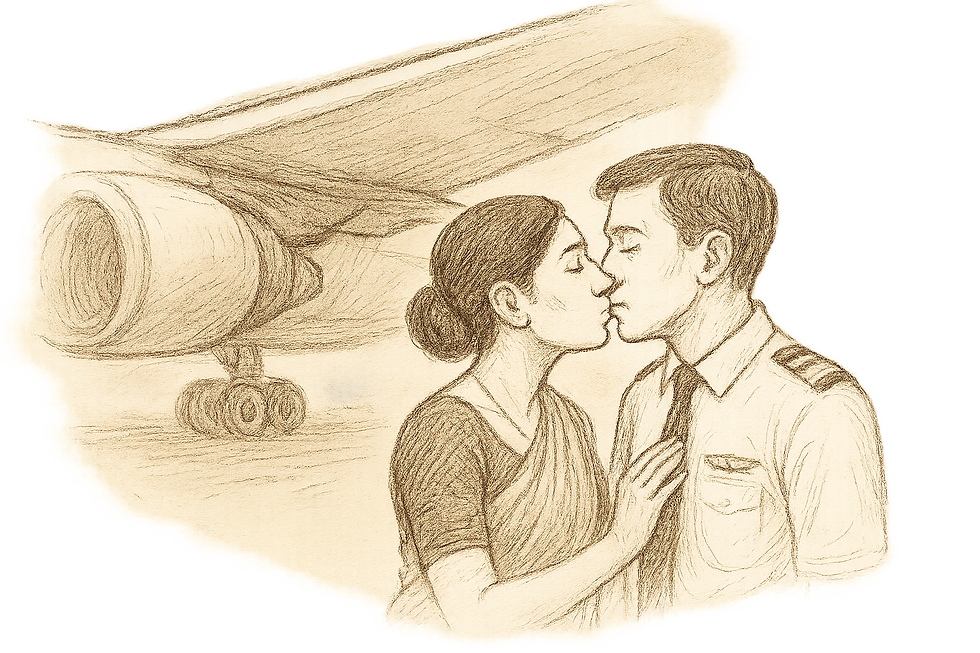
I believe that both children and adults should possess the innate quality of questioning driven by curiosity. Adults can approach this in a more mature way by relating it to their accumulated experiences, potentially achieving faster results. By presenting the same questions to different groups, the responses might vary significantly, and maturity can aid in resolving issues by applying diverse perspectives, leading to remarkable outcomes. Teaching in reverse is not a bad idea, whether to younger individuals or to oneself. For example, consider the simple question: how does an aircraft fly? Is a smooth landing preferable, or is a forceful landing that makes good contact with the runway better, especially when the runway is wet?
It is better to sit with confusion , give yourself some time to mull ,doodle , let your brain try first and if not satisfied go to AI.--for second opinion .Give priority to yourself first , the AI is a baby , it will react the way you feed, and it absolutely depends upon you to accept or discard .In taking a big life choices,or like designing a product or if you are entailed to craft a policy, what will matter is not whether you remembered framework or formula but whether you could ask , pertaining questions? the impact it will cause, Is there I am missing something? SWAT analyses of the situation , because that is what smart looks like . Not fast but curious because the latter takes you to the depth of the issues.


Comments